
Futures
Explore four possible AI governance futures for 2040 – discover what you can do about it today. By depicting future visions, these futures provide an overview of a wide range of possible development paths. Futures are not predictions or forecasts. They do not claim to illustrate events that will actually occur. Rather, they reduce complexity so that we are better able to identify important changes. Moreover, they are not mutually exclusive: they complement each other as ‘spaces for potential developments’. The actual future will be made up of various scenarios and other unforeseeable factors combined. With this in mind, the value of the futures lies not in whether they might happen as described, but in the guidance they provide for strategic decision-making.
GROWTH
Technology rivalry instead of collaboration: the race for AI supremacy
Based on Jim Dator’s Archetype method: Current trends and developments continue without major interruptions. The system remains on its current course.
China’s AGI supremacy divides blocs; U.S. struggles, Europe stagnates, instability.


COLLAPSE
Privileges and regression: AI as an instrument of geopolitical control
Based on Jim Dator’s Archetype method: Established structures no longer work. The system fails and enters a phase of dysfunction.
AI oligopolies dominate governance, resources scarce, conflicts escalate, decentralization rises.
DISCIPLINE
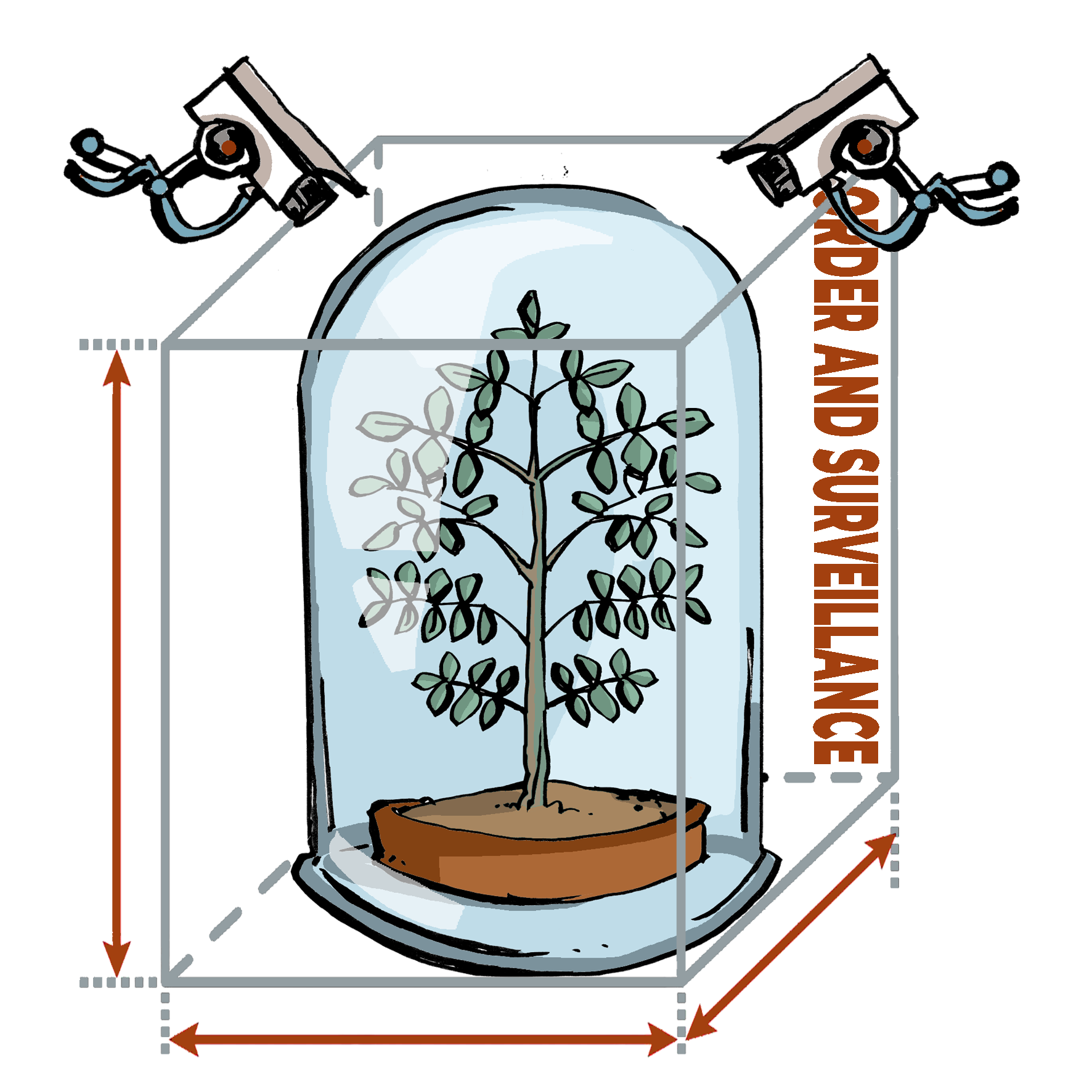
Uniformity and stability: strict rules, controlled progress
Based on Jim Dator’s Archetype method: Major challenges call for adaptation and compromise. Although the system is stabilised, it changes significantly.
China leads strict AI regulation; CipherNet rebels with open‑source.

TRANSFORMATION
Collective identity and experience: an AI order for the common good
Based on Jim Dator’s Archetype method: Old structures are replaced as new approaches for the future emerge. The system undergoes fundamental change.
Self‑Explaining AI democratises governance, challenges dominance, fosters global cooperation.
READY-MADE PROMPTS
Pick one to send directly to the chatbot – no typing needed.